|
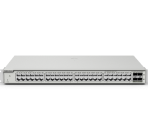
The VCS (Virtual Chassis System) is a feature that provides virtualization and clustering capabilities for switches. VCS technology allows multiple physical switches to form a logically unified device, creating a virtual switch stack. This stack is treated as a single entity with shared management and data planes. Hot standby can improve data forwarding reliability when an NBS switch is used as the core switch. By stacking two switches and automatically switching to the standby switch when the active switch fails, hot standby ensures uninterrupted data forwarding in the event of a single point of failure. VCS has the following advantages: (1) Simplify management. After two switches form a VCS, the administrator can manage the two switches in a unified manner without connecting to the two switches for configuration and management respectively. (2) Simplify the network topology. VCS is equivalent to a switch in the network. It is connected to peripheral devices through aggregated links. There are no layer 2 loops and therefore no need to configure the MSTP protocol. Various control protocols run as a switch, such as unicast routing protocols, reducing the interaction of a large number of protocol packets between devices and shortening route convergence time. (3) Failure recovery time is shortened to milliseconds. VCS and peripheral devices are connected through aggregated links. If one of the member links becomes faulty, the time to switch to another member link is 50 to 500milliseconds. (4) VCS and peripheral devices are connected through aggregated links, which provide redundancy, achieve load balancing, and make full use of all the bandwidth. |
|
The idea of seamless data forwarding by automatically switching to the standby switch in case of a failure provides a robust solution for preventing disruptions due to single points of failure. |
|
hi there as you mention in no. 2 for example i have tier 3 network then since no need rstp protocol so the root bridge should be in the distribution instead of core? please clarify we are doing now big network project planning. (2) Simplify the network topology. VCS is equivalent to a switch in the network. It is connected to peripheral devices through aggregated links. There are no layer 2 loops and therefore no need to configure the MSTP protocol thanks |
Ravdrak replied at 2026-11-18 17:16 Hi Ravdrak, It depends on how the core layer connects to the aggregation layer. Scenario A: Layer 3 routed links are deployed between the core layer and aggregation layer 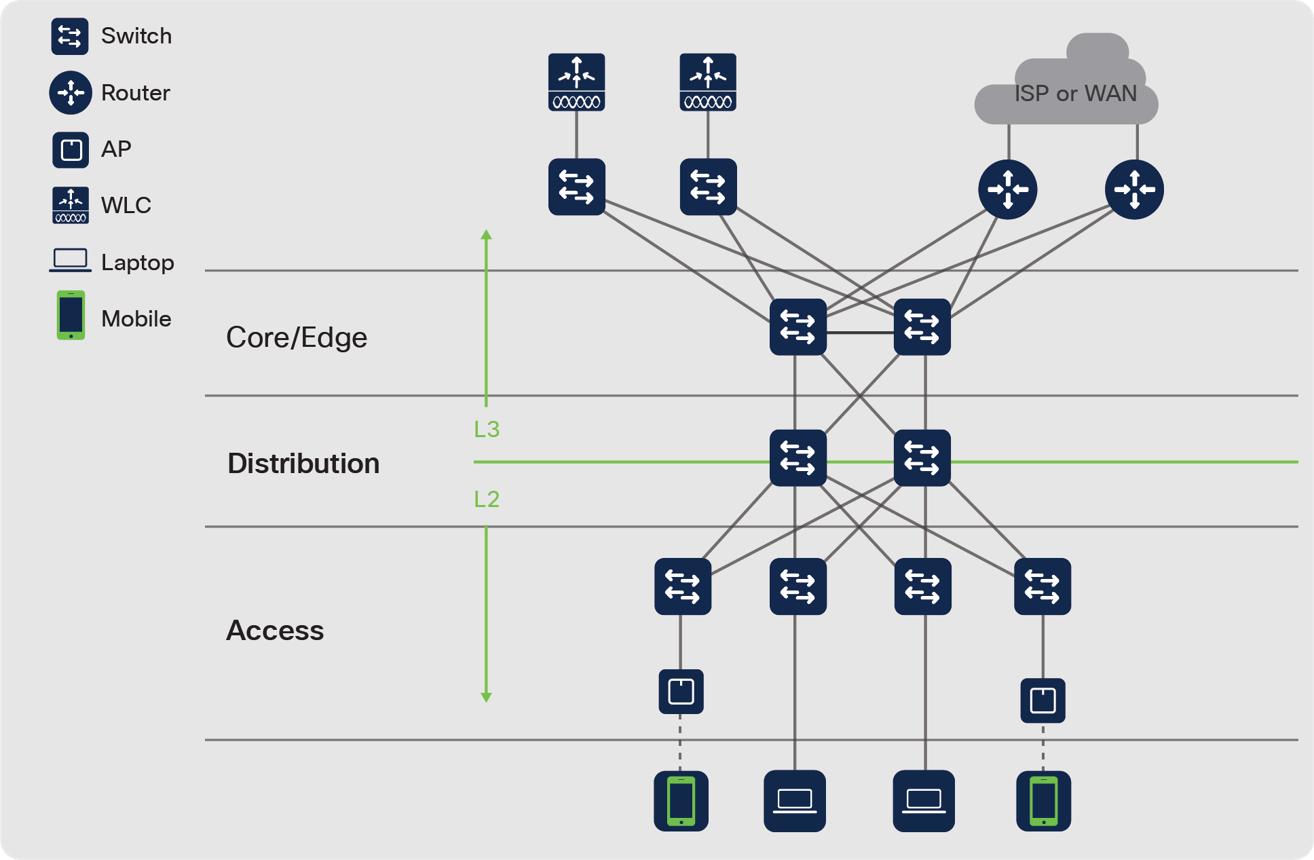 Example: 1. Layer 3 interfaces are used between the core and aggregation layers. 2. The aggregation layer serves as the VLAN gateway and performs Layer 2 aggregation for access switches. 3. The core layer handles Layer 3 routing forwarding. 4. Layer 2 broadcast domains of VLANs do not traverse the core layer. Under this condition, a Layer 3 boundary exists between core and aggregation, and spanning tree protocol will not cross this boundary.If redundant Layer 2 links exist inside the aggregation layer, the root bridge shall normally be placed on the aggregation layer instead of the core layer. Scenario B: Layer 2 Trunk links are deployed between the core layer and aggregation layer 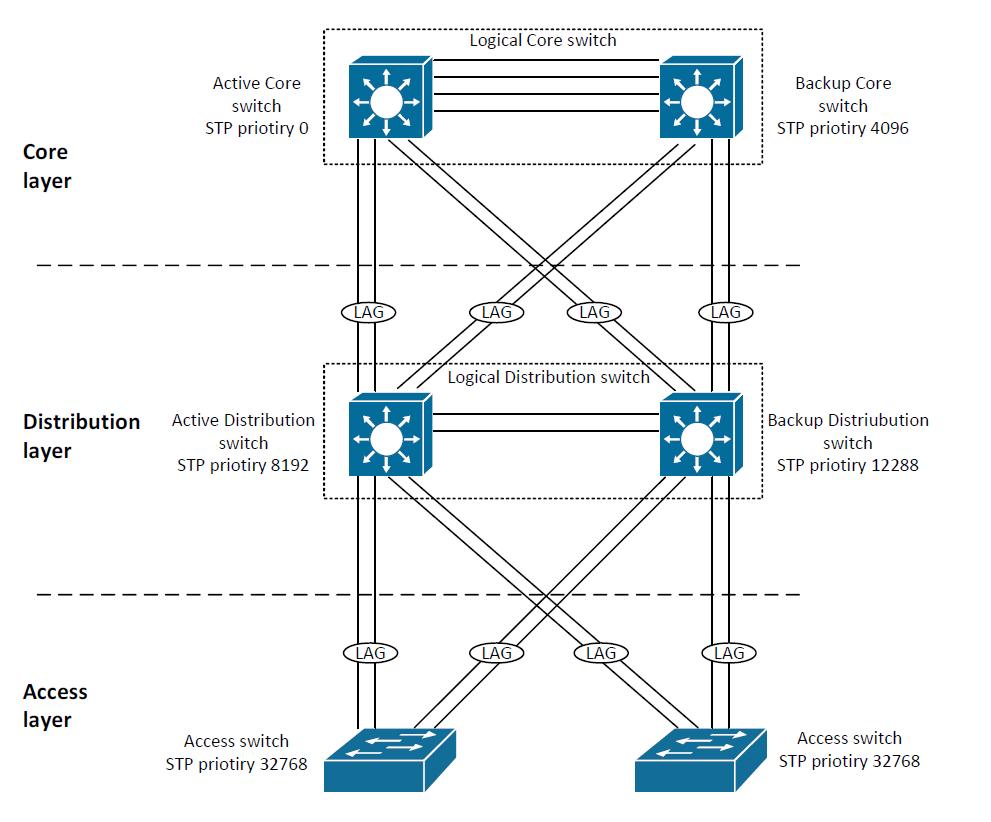 Example: 1. Trunk links are used between the core and aggregation layers. 2. VLANs span across the core layer and aggregation layer. 3. Multiple redundant Layer 2 paths exist. MSTP/RSTP is required at this point to prevent Layer 2 loops.If the core layer joins the same spanning-tree domain, core switches can also be candidates for the root bridge. The actual root bridge placement shall be decided based on the Layer 2 topology of VLANs, traffic forwarding path and redundancy design. We cannot simply assume that the root bridge must reside on the core layer or the aggregation layer in a three-tier architecture. So the statement " VCS is equivalent to a switch in the network. It is connected to peripheral devices through aggregated links. There are no layer 2 loops and therefore no need to configure the MSTP protocol " means that: 1.the VCS acts as one logical switch externally. 2.The VCS connects to peripheral devices via link aggregation. 3.If these aggregated links logically form a single link, and there are no other redundant Layer 2 paths in the whole network, no Layer 2 loops will be formed. 4.Link aggregation itself does not create Layer 2 loops. Even if an aggregated group contains multiple physical links, they participate in topology calculation as one logical port from the perspective of spanning tree.Under this circumstance, MSTP is not required to block redundant Layer 2 links. |
Edited by Ravdrak at 2026-11-21 14:34 Craig replied at 2026-11-20 16:29hi craig thank you very much for the very well explained, the only come up to my mind too confusing because the ruijie HA is a virtual cluster switching a two physical switch into 1 logical domain switch. i talked one of the ruijie engineers about this scenario they said once the switch converted to logical the assignment of rstp should only single value (ex. 0as a root) and no second increment value on the switchB due to the whole thing is logical i dont know if this engineer talked last time telling the correct information. I'm pretty sure your expert on this maybe you can give some inputs, or we can wait ruijie engineers to provide the exact information. actually is a tier2 network is a medium setup plus the switch core model has aggregation capable i think can handle 60% enough of traffic. cheers craig 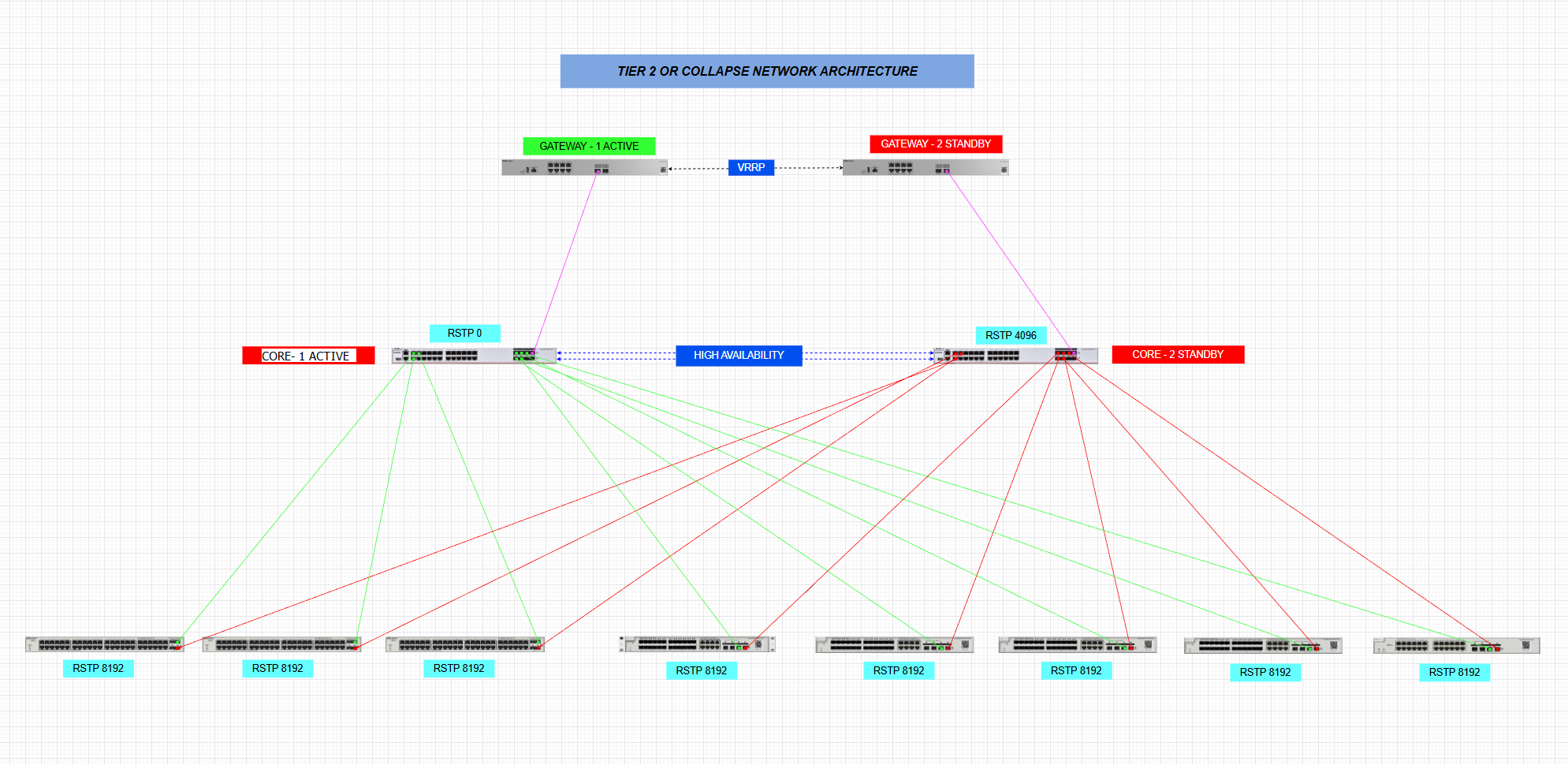 |
Ravdrak replied at 2026-11-21 10:36 Hi Ravdrak, Yes the VSU operates as one logical switch and advertises only one set of STP bridge ID and bridge priority. The two core switches should be treated as one logical STP bridge rather than two independent switches.So there is no need to configure priority 0 on Core 1 and priority 4096 on Core 2 separately. The RSTP priority only needs to be configured once for the logical VSU system I think. |
This site contains user submitted content, comments and opinions and is for informational purposes only. Ruijie may provide or recommend responses as a possible solution based on the information provided; every potential issue may involve several factors not detailed in the conversations captured in an electronic forum and Ruijie can therefore provide no guarantee as to the efficacy of any proposed solutions on the community forums. Ruijie disclaims any and all liability for the acts, omissions and conduct of any third parties in connection with or related to your use of the site. All postings and use of the content on this site are subject to the Ruijie Community Terms of Use.
More ways to get help: Visit Support Videos, call us via Service Hotline, Facebook or Live Chat.
©2000-2023 Ruijie Networks Co,Ltd


 Level 6